
For well over a decade, Google has dominated the search market with approximately 90% of all global search traffic. This is why until recently marketers of all types have learned to live by Google’s rules-both for SEO and pay-per-click ads. But the world of search engine marketing is about to experience a seismic shift. Major developments in artificial intelligence are bringing new players to the scene, including Apple, Microsoft, OpenAI, Perplexity AI, and Anthropic all positioning themselves for a chance to be the next leader in search.
Anyone who has ever tried a tool like OpenAI’s ChatGPT can see the profound potential it holds for finding information. Even though it works differently from a traditional search bar, these smart models can now access the internet to answer search queries and offer real-time product recommendations, much the same as Google can. This change was already happening even before OpenAI launched its search engine prototype, called SearchGPT, to a limited number of users in July 2024.
With more than a decade of experience as a Google-certified marketer, I can say that one thing is very clear: the traditional ways we do search engine marketing will no longer ensure that our content continues to be in the line of sight. The tool ChatGPT does always point to the same content ranking in the top organic results of a Google search page. That would suggest that our regular SEO techniques will soon be inadequate for this new form of AI search. If this change were not enough, OpenAI’s CEO Sam Altman has expressed a fundamental aversion to ads, which could make subscription-based search tools could shake the very foundation of PPC advertising.
That changes everything for the brands that have relied on traditional search strategies in the past. More and more, the focus is shifting to first-party data and personalized search experiences. Understand these emerging trends and you can begin to develop your roadmap for adaptation, enabling your marketing to remain visible no matter how search will continue to change.
What Is AI-Powered Search?
AI search is an emerging method for online information research . It uses artificial intelligence to understand your questions and find the answers for you. One fantastic example of this is Google’s “AI Overviews,” which launched in May 2024. In fact, Google described this functionality as letting Google do the searching for the user. Of course, that is the same goal for other major tools, like Perplexity, powered by technology from OpenAI.
Instead of a simple search box in which you’d type a few keywords, you are presented with a text field inviting the entry of a full, detailed question. Consider the difference it makes as you type “best marketing strategies” versus asking, “What are the most effective digital marketing strategies for small coffee shops in downtown Vancouver this year?” Then, the AI tool scans the internet and puts together a direct answer to your specific question. It will often provide source links and images so you can explore further.
This conversational question-and-answer style is only the beginning. The most recent generation of AI tools includes ChatGPT-4o, Claude 3.5, and Llama 3.2, which can present responses to you that go far beyond simple text. They can include images, videos, and interactive elements such as graphs and charts; this is called a “multimodal” approach, and it means you get a more engaging answer without needing to scroll through pages of website links.
These tools also comprehend different types of input. For example, ChatGPT-4o allows for voice searching, thus making it easier to search hands-free. Similarly, for iPhone users, Apple is bringing similar power to Siri. recent updates with its Apple Intelligence platform in iOS 18.1 are making Siri more conversational. By 2026, Apple will heavily enhance Siri with more advanced language model features, putting the company in direct competition with other advanced AI platforms such as ChatGPT, and changing how we all search for information in the future.
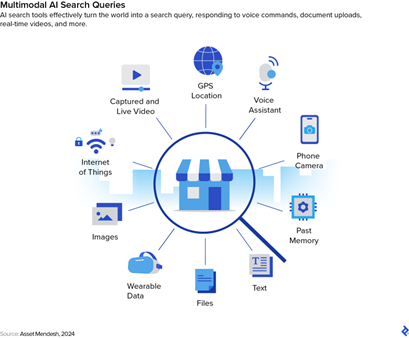
This powerful AI is now being combined into user-friendly, compact, and wearable devices. The most innovative products include the Humane AI Pin, Meta’s Ray-Ban Smart Glasses, and Orion’s AR glasses are leading the way. These devices recognize their environment visually and listen to it, which suggests that search in the near future will be part of our movements without us even noticing. Google is, of course, also experimenting in this domain, such as with Project Astra, which combines visual search with augmented reality for a wholly new way for users to interact with the world around them. One specific example with strong impact is the virtual assistant Be My Eyes, using the technology of OpenAI to serve people with visual impairments. By using their phone’s camera, this app can describe the surroundings, effectively helping them around. In this new landscape, the whole of our environment becomes a question for AI to answer.
I have tried these AI-powered search tools myself in various situations, and I can attest that they really do speed up the process of finding information online; what’s more, the most astonishing thing about them is that they’re able to learn a user’s preferences and past interactions. They deliver personally tailor-made responses, turning search from a chore into a seamless, intuitive conversation.
1. Focus on Conversational Questions and Answers
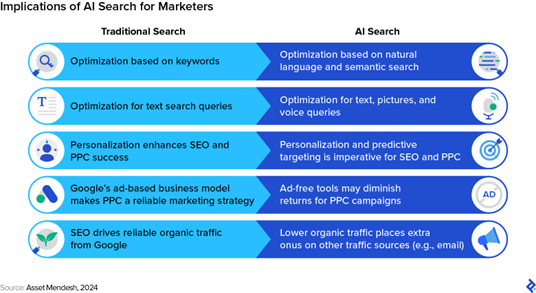
The biggest difference AI search creates is a shift from short keywords to full, conversational questions. Consider the difference between “women’s white sneakers” and “What are the best women’s white sneakers with no visible branding for under $100?” AI search engines like ChatGPT, Perplexity, and Google’s own AI-powered search are built to understand the full context of a question. Their goal is to find content that directly answers the user’s underlying need, rather than just to match a few specific words.
This trend toward natural language touches both SEO and PPC. Much SEO work in the past was about optimizations for exact keyword phrases, which sometimes created content that seemed more fitting for a search engine than an actual human being. While Google has always valued content that is trustworthy and expert-finding that follows its E-E-A-T principles-this gets even more important in the new AI landscape. Brands will have to really create incredibly in-depth and helpful content that satisfies a user’s curiosity.
The same would apply to paid advertising. PPC campaigns will need to become more organic in tone with their ads, as well as target the longer, more specific questions people are asking of AI tools.
2. Get Ready for Multi-Format Search (Text, Images, and Voice)
The next wave of AI search isn’t just about words. is going “multimodal,” meaning it understands a mix of text, images, and voice all at once. Tools like Apple Visual Intelligence and Google Lens are at the forefront of this change. They let users perform searches by combining what they see with what they ask. For example, someone could take a photo of a storefront and ask their phone, “Is this open today?” or snap a picture of a dinner menu and ask, “What are the vegan options?”
To compete here, brands need a strategy that considers both spoken questions and visual cues. The basic rules of voice search still apply, meaning to focus on targeting long, conversational phrases. You also need to ensure your images and other visual media are appropriately labeled with metadata and structured data-sometimes referred to as schema. That kind of markup serves like a highly detailed signpost for AI, highlighting important information such as hours, location, and customer ratings. The clearer and more specific your details, and the better your reviews, the easier it is for AI assistants like Siri to find and recommend your business.
For both SEO and PPC, this means optimizing your content. You should use descriptive alt-text for images and craft meta descriptions that include the longer, natural-sounding keywords people use when they talk to their devices. Align your content with the way people are now searching—by having a visual and vocal conversation with AI.
3. Master Personalization and Predictive Targeting
AI search has started to move beyond one-size-fits-all results. Tools like ChatGPT can remember your past conversations and use that context to tailor future responses. If a user has previously searched for vegan restaurants in New York, for instance, the AI may then automatically suggest vegan-friendly results the next time they search for a place to eat. This opens up a new challenge and opportunity for both SEO and PPC: you need to make content and ads that feel uniquely relevant to a user’s specific situation and needs.
To meet this demand for personalization, PPC marketers utilize AI-powered tools like Adext, Albert, and Google’s own AI features to help create highly engaging, personalized ad copy and automatically adjust bidding strategies in real time. Visualize a travel company that uses this technology to show a user who has been researching a specific destination an automatically served set of deals for that destination, with the title and description of the ad automatically altered to most appeal to that user.
The power of these AI tools goes beyond mere reaction to a user’s active search. They can help in predictive targeting, anticipating what might be the next need a user will have. For PPC, that means delivering ads relevant not only to the current query but also to what the user is likely to do next, for better engagement and more conversions. In SEO, that means you’re creating content that proactively addresses a user’s evolving questions, ensuring your brand is helpful and relevant to them throughout the entire decision-making process.
4. Get Ready for a More Competitive Paid Ads Landscape
The trend of AI search platforms seems to indicate a paradigm shift in how brands can reach customers. OpenAI’s subscription-based model for ChatGPT does paint a different vision for the future, with ads playing a much smaller role. If ad-free search tools start to become the norm, then the number of available paid ad slots would shrink considerably. And this is one big challenge to PPC since the whole core strategy relies on those placements.
AI firms need to finance the enormous computing power that drives their models. Some of them have already begun testing paid ads complementary to their premium subscriptions, such as Perplexity. The rest will almost surely follow OpenAI’s lead and focus on subscriptions, which may yield a future whereby organic presence-and not paid advertising-is the major way to seek visibility in selected AI tools.
For that reason, an effective SEO strategy is going to be more important than ever. With paid opportunities reduced, fighting for the remaining ad positions will be more costly. The surest way of your brand being seen, then, will be by optimizing your content to rank highly in traditional organic results and, just as importantly, to be selected as a source for AI-generated answers. In a world with fewer ads, winning organically is how you keep visible.
5. Don’t Rely on Search Alone: Expand Your Marketing Mix
A major concern with the rise of AI search is that it may cut traffic to brand websites. These advanced tools are designed to give the user a complete answer directly in the chat, thereby eliminating any need to click through and visit the source. This means you could create the perfect answer but still see fewer visitors because the AI delivered it for you.
In fact, this development makes customer relationships even more important, and it creates the need to build other ways to connect with your audience across different platforms. Channels such as email newsletters, podcasts, and social media are becoming crucial. They create a direct, long-term relationship with your audience-one that cannot be replaced by an AI search result.
Community and personalized content are key focal points within these spaces that will help you stay relevantly in your customers’ lives. This complements the simplicity and task-oriented nature of AI search. Building these direct connections will be a critical component of any successful marketing plan in this continuing evolution of the digital world.
How Does AI Search Fit with Other Marketing Shifts?
Even without AI’s rise to challenge Google’s hegemony, search marketers already have enough significant industry changes to which they must adapt. Among the more fundamental changes are those touching online privacy and data tracking.
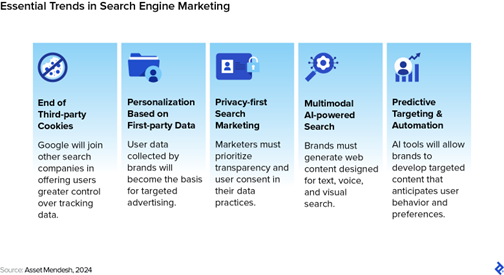
For years, browsers like Safari and Firefox have blocked third-party cookies. Third-party cookies are pieces of code that track what users do across different websites, and they have been integral for creating targeted PPC ads.
Although Google has abandoned its own scheme of completely removing these cookies from its Chrome browser, it is introducing an opt-in model. This means that in the future, Chrome users will be explicitly asked for their permission before a site can use third-party tracking. This shift, coming with the growth of AI search, leaves marketers facing a new world where they need to find new ways to reach their audiences effectively and respectfully.
But Google’s decision merely delayed the death knell of third-party cookies; the march toward increased user privacy has already brought significant change to marketers. We saw this very clearly when Apple, in 2021, started forcing all apps to pop up a user-tracking permission notification; within months, most iPhone users chose to opt out.
This moves away from third-party tracking makes first-party data-the information customers willingly share with you-an incredibly valuable asset. Not only is this data more privacy-friendly, but it’s also the fuel for effective AI-driven personalization. To succeed, brands should invest in systems that can capture and manage such data directly through website interactions, newsletters, and other customer touchpoints. Google itself advises the use of solutions like Google Analytics 4 with sitewide tagging to gather high-quality data within a privacy-conscious framework.
Meanwhile, the entire digital advertising industry is under legal scrutiny, Google included, for its anti-competitive practices. That means future AI advertising tools could also fall under new regulations and reshape the market anew.
In this new era-dominated world of AI search, privacy changes, and declining third-party cookies, the path is apparent. Embracing AI tools by building a solid foundation of first-party data will not only help brands adapt to new rules but also enable them to create more personalized, effective marketing experiences for their audience.
The Future of Search: A New Playbook for Marketers
The rise of AI-powered search is not just a small update; it’s the start of a completely new era for digital marketing. The old rules of SEO and PPC, which focused heavily on specific keywords and third-party tracking, are changing for good.
This new paradigm is built on AI’s ability to understand full sentences, predict what a user wants, and deliver personalized answers using a brand’s own customer data. This shift rewards marketers who are ready to adapt. Those who cling to outdated methods will likely see their online visibility fade.
The winning strategy is clear: focus on the human experience. Brands that create truly helpful, high-quality content designed for people—not just search engines—will come out on top. This content must be versatile, ready to be delivered through text, images, voice, and video.
In the end, AI is building a more intelligent and direct digital world. Success will belong to the marketers who embrace AI tools, prioritize privacy-safe data, and create content for this new, multimodal reality. The future of search is here, and it demands a new playbook.